Biography and Early Life
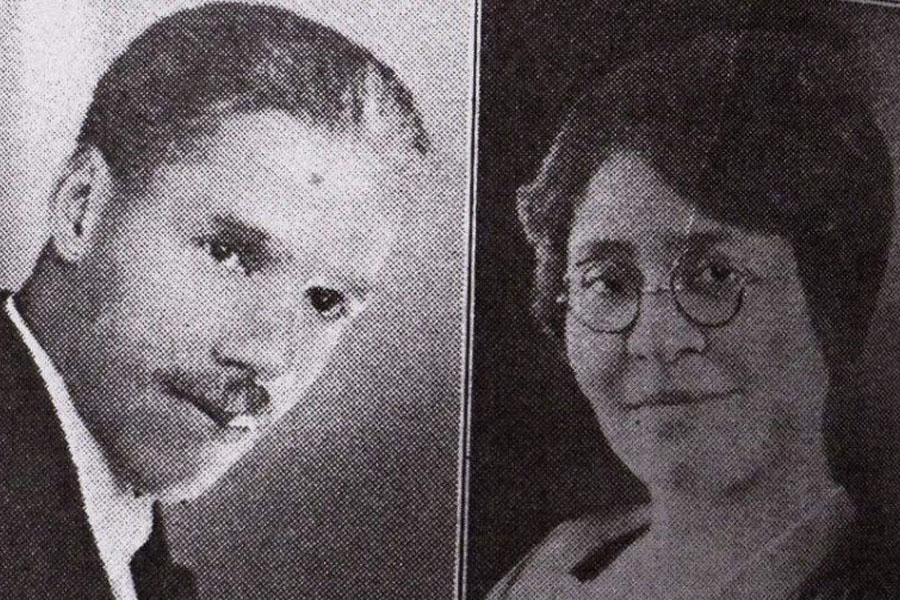
As someone who lives partly in the spotlight and half in the background, I approach Aaron Eugene Malone. He appears in the early record as an educator, a teacher, a school principal, and occasionally a Bible salesman. Memorial records that circulate in public registers indicate that he was born around November 10, 1876. These are succinct, accurate descriptors that let me know he dealt with people and language, and that he progressed through positions requiring persuasion and discipline.
Here, dates are important. On April 28, 1914, he wed Annie Minerva Turnbo. His life changes from being a private schoolteacher to an executive officer on just one date. In public records from the 1910s and 1920s, he is recognized as the president of the Poro enterprise. He shows up there as an organizational figure, a steady hand in a business whose founder was, in a sense, the real motor. Ten years later, the marriage resulted in court cases and headlines. By 1927, a legal battle between the union and the corporation had put it under receiver control for a while. According to later reports, he passed away in St. Louis on December 22, 1952. Education, administration, and a public breakup that would define his reputation and the name of the company he formerly owned fall between those dates.
Family and Personal Relationships
I present family details sparsely because the historical picture is narrow. The one firmly attested personal relationship is his marriage to Annie Malone. Here I introduce her and their relationship in depth.
Annie Minerva Turnbo Malone, Spouse
Annie was not merely a spouse; she was a pioneering entrepreneur who built a wide-reaching cosmetics and haircare enterprise called Poro. She became wealthy, public, and influential in her own right. Aaron’s marriage to Annie on April 28, 1914 put him into the center of a business that by the late 1910s and early 1920s was generating substantial revenues. In the formal materials of the business he is presented as president, a managerial anchor even as Annie remained the creative and financial force.
In personal terms their marriage is a study of complementary and conflicting ambitions. He provided administrative leadership. She provided product innovation, brand identity, and capital. That complementary pattern collapsed into conflict by 1927 when divorce and a demand for equitable distribution of business interests led to public court battles and reported settlements that reshaped both their lives.
Other Family Members
Public records and the communal histories I worked from do not present a clear roster of Aaron’s parents, siblings, or children. His presence in the archive is typically relational: Aaron, husband of Annie; Aaron, president of Poro. When a life is mostly visible through another life, the family tree often remains a skeleton of unnamed branches. I note this absence not as omission but as a characteristic of how the historical record preserved certain stories and left others out.
Career, Finance, and Work Achievements
I follow three careers that overlap. First, the positions of principle and instructor require structure and people management skills. The second position is that of an itinerant Bible salesperson, which calls for a network of local contacts and persuasive speaking. Third, while married, Poro worked as a corporate executive.
The Poro company was large. According to popular records, Annie Malone’s business endeavors were extremely prosperous by the 1920s. She was one of the wealthiest African American businesswoman of the time, according to tax data and commentaries from the time. In his capacity as president, Aaron oversaw a company that had a campus, correspondence, and a nationwide distribution network. When a financial dispute arose in 1927, the company was briefly placed under receivership by the litigation. Negotiated settlements involving amounts in the low six figures by the standards of the day are mentioned in reports from that era. This was business on a size that many tiny enterprises never attained, regardless of whether those figures are exact or rounded by modern reporting.
Aaron’s accomplishments are primarily administrative. He can be found in promotional materials from that era that have the title of president. He oversaw operations during a period when Poro expanded and experienced instability. Rather than being inventorial, his accomplishments are organizational. While someone else built the ship, he was the captain at the wheel.
Timeline
| Date | Event |
|---|---|
| 1876 (approx) | Birth of Aaron Eugene Malone recorded as Nov 10, 1876 in memorial notices. |
| Early 1900s | Career as teacher and school principal; occasional Bible sales work. |
| April 28, 1914 | Marriage to Annie Minerva Turnbo Malone. |
| 1915 to 1926 | Identified in business materials as president of Poro; company expands. |
| 1927 | Divorce proceedings and litigation over Poro business lead to receivership and settlement negotiations. |
| Post 1927 | Annie reasserts ownership and relocates much business activity; Aaron recedes from prominent public notice. |
| December 22, 1952 | Recorded death in St. Louis area records. |
A timeline is a string of signposts. These signposts show turning points. They also reveal the silences between them.
Recent Mentions and Legacy
I see Aaron’s name surface in two different registers. One is commemorative: museum pages, historic summaries, and promotional artifacts that preserve his title and his role in a business narrative dominated by Annie Malone’s achievements. The other is the modern phenomenon of shared names. In the present day the same name appears in unrelated records attached to other people. That is a cautionary metaphors for public memory: a name can be a riverbed that holds many different currents at different times. Aaron Eugene Malone the early twentieth century executive should not be confused with any modern person bearing his name.
FAQ
Who was Aaron Eugene Malone?
I describe him as an educator turned executive who married Annie Minerva Turnbo on April 28, 1914 and served publicly as president of the Poro enterprise during their marriage years. He managed operations and took on administrative duties while Annie provided the entrepreneurial leadership.
What is known about his family?
The only clearly documented family relationship is his marriage to Annie Malone. There are no consistent public records naming his parents, siblings, or children in the archival materials commonly cited in community histories.
What were his major career achievements?
His major achievement was his role as president of Poro in the 1910s and 1920s. He appears in promotional items and business materials with that title. His work was managerial: organizational oversight, operational leadership, and public representation in the era when the company was expanding.
How did the divorce affect his life and finances?
The 1927 divorce generated litigation that briefly placed the business under receivership and led to negotiated settlements that reshaped ownership. Financial reports of the era cite settlement figures in the tens or hundreds of thousands of dollars. The legal conflict curtailed his public role and shifted control back to the founder.
When did he live?
Memorial records indicate a birth around November 10, 1876 and a death on December 22, 1952. Those two dates frame a life that touched the transition from the late nineteenth century into the modern twentieth century.
Are there surviving descendants?
Public historical records I examined do not present a reliable list of descendants. The archival focus remains on Annie Malone and the corporate story, leaving personal genealogies sparse.
How should we remember him?
I remember him as a figure of structural importance: not the inventor of the enterprise but the armature that supported it for a time. He is the administrative backbone in a narrative that otherwise shines on Annie. Like a shadow that helps define a profile, his presence helps the contours of a more visible life become legible.