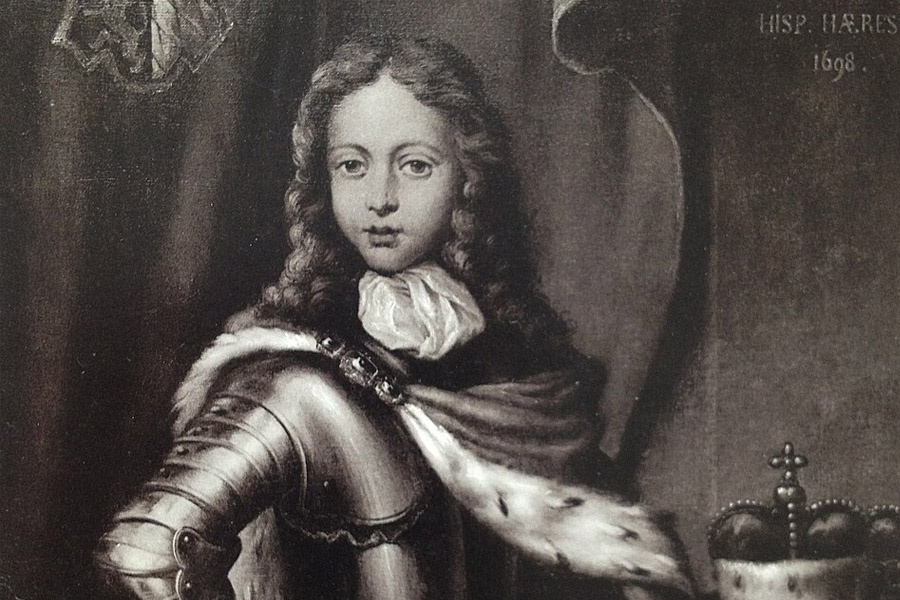
A brief portrait of Joseph Ferdinand Of Bavaria
I see Joseph Ferdinand Of Bavaria as one of those historical figures whose life was short but whose shadow was long. He was born on 28 October 1692 and died on 6 February 1699, living only six years, yet his name moved through royal courts like a bright coin passed from hand to hand. He was not remembered for battles won or laws written, because childhood denied him that path. Instead, he became a symbol of inheritance, legitimacy, and political hope.
He was the Electoral Prince of Bavaria, a child bound to two great houses at once, the Wittelsbachs of Bavaria and the Habsburgs of Spain and Austria. In a Europe stitched together by marriages, bloodlines, and treaties, that made him unusually important. He was less a private child than a living bridge between dynasties. His birth was watched with the intensity usually reserved for coronations. His death, still more than two centuries ago, still feels like a snapped thread in a tapestry.
His birth and early years
At the Hofburg Palace in Vienna, Joseph Ferdinand of Bavaria was born. That setting counts. His Vienna was more than a city. It hosted imperial ambition, family tragedy, and succession politics around his cradle.
His mother, Maria Antonia of Austria, died soon after delivery. That loss influenced his childhood from the start. He was born with an inheritance, but the individual who related him to the Spanish royal family died quickly. He was then raised by his grandfather, Holy Roman Emperor Leopold I. That arrangement seems like protection and ownership. Though cherished, he was a silken diplomatic weapon.
Munich received him in 1693 from Vienna. He was already in statecraft orbit. He was a child, but adults thought in crowns, territory, and treaties. His life was like a light in a drafty hall. Everyone saw the light. What if it went out? Everyone worried.
The family web that defined him
Joseph Ferdinand’s story cannot be separated from his family. His identity was built from branches of a royal tree whose roots reached across much of Europe.
| Family member | Relationship to Joseph Ferdinand | Why this person mattered |
|---|---|---|
| Maximilian II Emanuel | Father | Elector of Bavaria, his main dynastic link to the Wittelsbach line |
| Maria Antonia of Austria | Mother | His direct link to the Spanish Habsburg succession |
| Leopold I | Grandfather on his mother’s side | Holy Roman Emperor and his early guardian |
| Margaret Theresa of Spain | Grandmother on his mother’s side | Daughter of Philip IV, central to his Spanish claim |
| Philip IV of Spain | Great-grandfather | One of the strongest sources of his legitimacy |
| Mariana of Austria | Great-grandmother | Connected him deeper into the Habsburg-Spanish line |
| Ferdinand Maria, Elector of Bavaria | Grandfather on his father’s side | Anchored him in Bavarian dynastic power |
| Henriette Adelaide of Savoy | Grandmother on his father’s side | Added another prestigious European line |
| Leopold Ferdinand of Bavaria | Full brother | Died in infancy |
| Anton of Bavaria | Full brother | Died in infancy |
| Theresa Kunegunda Sobieska | Stepmother | Mother of his half-siblings |
| Charles Albert | Half-brother | Later became a major Bavarian ruler |
| Clemens August | Half-brother | Became a powerful church and political figure |
His father, Maximilian II Emanuel, was a major Bavarian ruler and military figure. He gave Joseph Ferdinand his Bavarian identity and the political machinery that came with it. His mother, Maria Antonia of Austria, tied him to the Habsburg and Spanish lines. Through her, Joseph Ferdinand became a descendant of Margaret Theresa of Spain, which made his claim to the Spanish monarchy especially significant.
His grandparents formed another important layer. Leopold I was not only a grandfather but an emperor, a man who understood dynastic leverage better than most. On the Bavarian side, Ferdinand Maria and Henriette Adelaide gave Joseph Ferdinand a strong princely base. Philip IV of Spain and Mariana of Austria strengthened the Spanish and Habsburg heritage that made him a possible heir in the first place.
He also had siblings, though very little of childhood family life survived in the historical record. Leopold Ferdinand of Bavaria and Anton of Bavaria both died young. Joseph Ferdinand remained the one child whose survival made him the center of political calculation. Later, his father’s second marriage produced many half siblings. Some became rulers, some churchmen, and some remained in the long shadow cast by their famous family. I think of them as later branches on a tree whose most discussed fruit was Joseph Ferdinand himself.
A child turned into a political answer
Joseph Ferdinand did not have a career in the usual sense. He did not hold office, command armies, or rule a territory personally. His career was dynastic, and in late seventeenth century Europe that was a serious kind of power.
He became the compromise heir around whom the Spanish succession crisis briefly found a possible solution. Charles II of Spain, childless and politically surrounded, needed a successor acceptable to competing powers. Joseph Ferdinand looked like the answer. He belonged to the right family lines, but not too directly to the rival powers that frightened Europe. That made him useful in the logic of diplomacy.
In 1698, the First Partition Treaty named him as heir to the Spanish crown and its far reaching empire. That was a remarkable thing for a six year old to represent. The treaty was not about him as a child so much as about the architecture of Europe. He was a hinge on which a continent tried to swing away from war.
Charles II later reaffirmed Joseph Ferdinand in his will. That fact shows how widely his claim was taken seriously. He was not just a symbolic child. He was the center of a real political expectation. Had he lived, the map of Europe might have bent in an entirely different direction.
His death and the weight it carried
Joseph Ferdinand died in Brussels on 6 February 1699. The boy was six. His death had ramifications like thunder after a clear sky, notwithstanding historical suspicions, rumors, and speculation concerning poison.
His death reignited the succession question and paved the way for the Spanish Succession War. His brief life was like a dry room match. He died without ruling, but his absence changed history. Dynastic history has a weird force. Being born is sometimes the most crucial deed, while dying at the wrong time is second.
Personal life and what is not there
Joseph Ferdinand had no spouse and no children. He did not build a household, sign marriage contracts, or leave behind descendants. That absence is not a blank space. It is part of the story.
His personal life was compressed into court movement, guardianship, and succession meaning. There was no adult biography to unfold. Instead, his life was an echo chamber for the ambitions of parents, grandparents, emperors, and diplomats. He was loved, claimed, guarded, and projected upon. He was also a child who never grew old enough to resist the uses others made of him.
Why Joseph Ferdinand Of Bavaria still matters
I return to him because he is a reminder that history is often carried by people who never get the chance to shape it fully. Joseph Ferdinand Of Bavaria stands at the crossroads of Bavaria, Austria, and Spain. His bloodline connected some of the most powerful dynastic houses in Europe. His brief life influenced treaties, royal wills, and the balance of power between kingdoms.
He is a small figure in years, but a large one in consequence. A spark that briefly lit a whole chamber.
FAQ
Who was Joseph Ferdinand Of Bavaria?
Joseph Ferdinand Of Bavaria was the Electoral Prince of Bavaria, born in 1692 and died in 1699. He was a child claimant to the Spanish succession and the son of Maximilian II Emanuel and Maria Antonia of Austria.
Why was Joseph Ferdinand Of Bavaria important?
He was important because many European powers saw him as a possible compromise heir to the Spanish crown. His claim briefly offered a peaceful answer to a dangerous succession crisis.
Who were his closest family members?
His closest family members included his father Maximilian II Emanuel, his mother Maria Antonia of Austria, his grandfather Leopold I, and his grandmother Margaret Theresa of Spain. He also had two full brothers who died in infancy and several half siblings from his father’s second marriage.
Did Joseph Ferdinand Of Bavaria ever rule Spain?
No, he never ruled Spain. He died as a child in 1699, before he could inherit anything.
What happened after his death?
After his death, the succession question returned in full force. The dispute helped lead toward the War of the Spanish Succession, one of the major conflicts of early eighteenth century Europe.
Did Joseph Ferdinand Of Bavaria have a personal career?
No, not in the ordinary sense. His life was too short for that. His importance was dynastic and political rather than military or administrative.